Seon and Shawna were facing a financial crisis. They were crushing it in the real estate industry as home flippers while mentoring students through their program.
But market conditions shifted quickly.
“We’re real estate flippers, and we also had a program called ‘Earn While You Learn.’ So we had students partner with us on several houses,” says Seon.
At one point, they had 15 homes under construction or renovation—some new builds, others rehabs.
Then interest rates spiked.
“Once the interest rate hikes went up, we had all these properties listed, and no one was able or willing to purchase. We all had positive testimonials about how beautiful the homes were, but it just wasn’t making any sense at the time.”
With multiple properties sitting unsold, the risk of foreclosure became real.
“We were building and renovating 15 homes at the time… and PadSplit helped us pivot and save our seven properties from going into foreclosure because they couldn’t sell,” says Seon.
Discovering PadSplit as a solution
Seon and Shawna had previously heard about PadSplit through industry connections, but it wasn’t the right fit at first.
That changed after the platform evolved.
“At the time, the rates were a little bit different, but once PadSplit restructured their system, it made perfect sense for us,” says Seon.
They explored other housing models first—transitional housing programs, travel nurse housing, and other rental platforms—but none delivered consistent results.
PadSplit did.
“Fortunately for us, all of our properties fit the mold of what members look for.”
Designing homes that work for shared housing
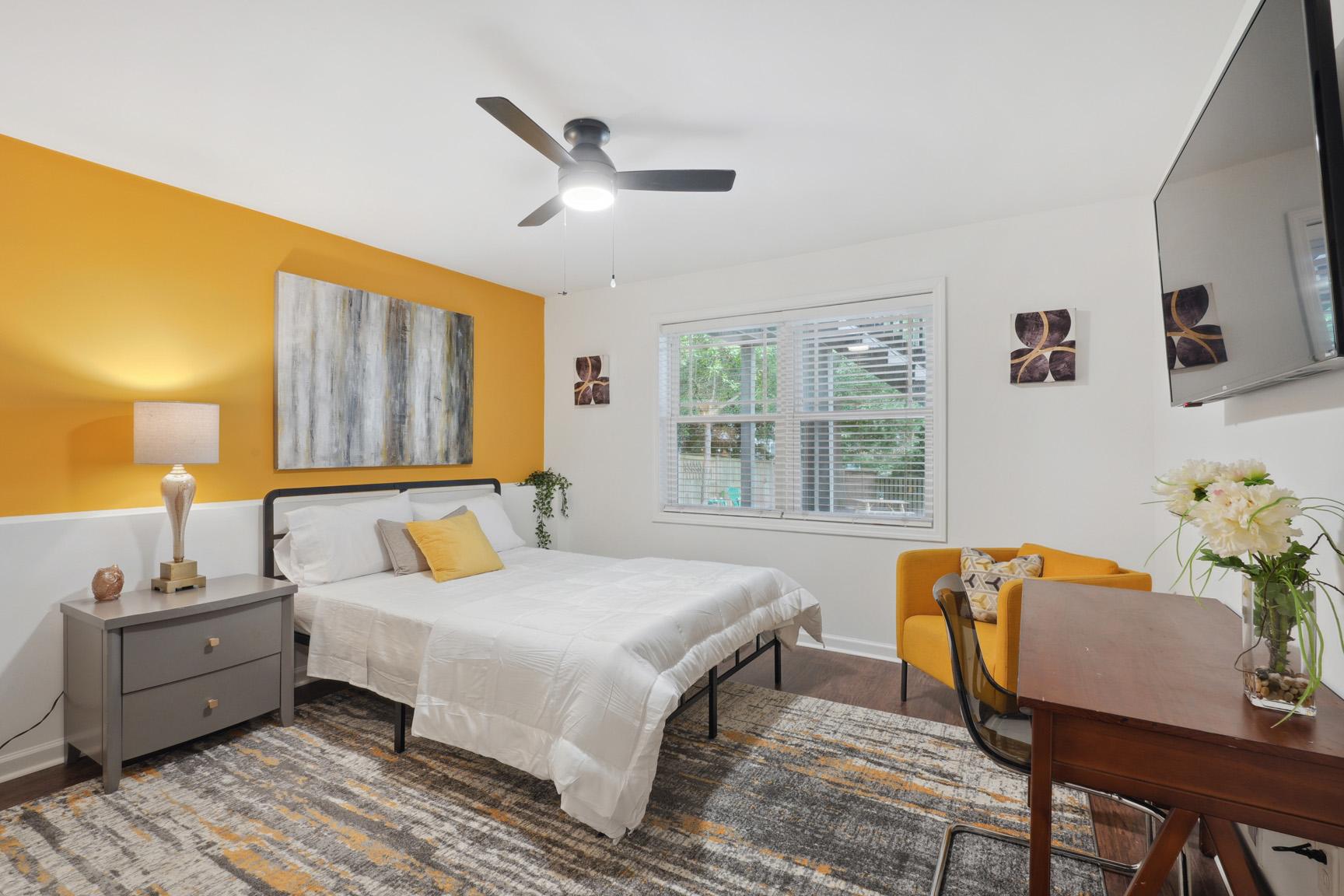
One of their early advantages was that their properties already matched what PadSplit members need:
- Access to transportation
- Close proximity to amenities
- Flexible interior layouts
That allowed them to maximize bedroom conversions.
“We were able to convert the bedrooms. We had two living rooms and one of them we converted; we were able to convert the sunroom into a full, nice-sized bedroom,” says Shawna.
When furnishing the rooms, they kept things simple.
“We went to IKEA, got some decent furniture. And yeah, everything worked out.”
Their first property had five bedrooms, and the income quickly validated the model.
“I think we grossed anywhere between $3,500 and $5,000, depending on how long the members stayed and if they all stayed at the same time,” says Seon.
Once they saw it work, they immediately scaled.
“We converted two more, then another one, then we purchased two more properties.”
One large property eventually expanded to 16 bedrooms.
Today, their portfolio is approaching 50 doors.
The secret to scaling: Automating hosting with AI front desk systems
One of the ways Seon and Shawna have been able to scale their portfolio rapidly is by using an AI receptionist, which helps manage resident calls and coordinate with contractors throughout the week.
The AI front desk system is easy to install and available to other PadSplit hosts here.
Why they’re now eyeing a 474-unit conversion
Shawn and Seon’s next move is even bigger.
“We’re looking to purchase an apartment building. It’s a 474-unit apartment building that we’re looking to convert into a whole community of PadSplits in Atlanta,” says Seon. “In apartments, the maximum inside the unit will be four, but really three is the sweet spot.”
That design balances density with livability.
“We’re making our properties a desirable place, not just somewhere people go because of circumstances.”
The secret to long-term member retention
Seon and Shawna quickly realized that retention was just as important as occupancy.
Many members arrive after negative housing experiences.
“We always ask individuals why they’re leaving their last location, and it’s really synonymous: messy, dirty, unsafe.”

Providing clean, well-managed homes has made a huge difference.
“We have cleaners come in once or twice a month, depending on the property, and members really appreciate it,” says Shawna.
Some members have stayed much longer than expected.
“I would say a lot of them stay past six months for sure.”
One member has stayed for over a year.
Amenities to install to attract more tenants
Small upgrades can significantly improve member satisfaction.
Some of their most valued amenities include:
Washer and dryer access
“A lot of them love the washer and dryer. Everybody wants to have a washer and dryer,” says Shawna.
Mini fridges in rooms
“A good 50 to 60 percent want their own personal mini fridge in their room,” says Seon.
Cleanliness and maintenance
“We have cleaners come in twice a month–our units are just so clean.”
Personal storage
“One thing that helps: if you can get some type of storage added to your property,” says Shawna. “Members often complain they don’t have enough space to store their things.”
They also assign cabinets and provide locker-style storage where possible.
Why installing security cameras is always a must
Security cameras in common areas are also critical.
“Security cameras help. Those who complain about the security cameras are usually the ones breaking the rules,” says Seon.
Seon and Shawna stress that the cameras are not used for constant monitoring.
“We don’t monitor the cameras all the time. We use them as evidence when someone makes a complaint.”
Reaching out to new members with welcome calls

Another practice that has helped them maintain quality housing is a welcome call with every new member.
“We have this welcome call where we go over all of our rules… they have to sign an agreement,” says Shawna.
This ensures everyone clearly understands house expectations from day one.
Using incentives to encourage on-time payments
Late payments and sudden move-outs are common challenges in shared housing.
To encourage consistency, they created a Rental Rewards Program.
“If you pay your rent on time for the whole quarter, you get a week free,” says Seon.
The rewards grow over time.
- 3 months on time → 1 week free
- 6 months → 2 weeks free
- 9 months → 3 weeks free
- 12 months → 1 month free
“If they stay, that’s just a week or two compared to missing a room for six weeks.”
Their current portfolio revenue
Today, their PadSplit properties generate substantial monthly income.
Some examples of their earnings from their portfolio include:
- First property: $4,600/month
- Property with ADUs: $4,700/month
- Condo (four-bedroom): $3,500/month
- Five-bedroom home: $4,000/month
- Larger home: $5,000/month
- Multi-unit property: $8,000–$9,000/month
Combined, their portfolio generates roughly $31,000 in revenue per month.
Why this power couple prefers PadSplit over Airbnb


Before PadSplit, Seon operated a large Airbnb portfolio.
“So when we met, I had 23 different Airbnbs.”
But over time, they found PadSplit more stable.
“Airbnb is a luxury. PadSplit is a need.”
Short-term rentals required constant turnovers and cleaning.
“With Airbnb, you’re sending cleaners every two or three days–people are having parties.”
PadSplit provides longer stays and consistent income.
“With PadSplit, it’s consistent… at least the tenants are going to stay three months.”

Three secrets to succeeding as a PadSplit host
For hosts just starting out, a few key principles are stressed.
1. Start with the right location
“Location and layout are the most important,” says Shawna.
Look for areas with:
- Transportation access
- Nearby amenities
- Job centers
2. Look for 2,000+ square feet
“Two thousand square feet is a sweet spot.”
That size provides flexibility for room conversions.
3. Use the PadSplit marketplace data
“We always search the zip code before we buy.”
This helps validate demand before purchasing.
Sharing their secrets to success with a new book: Room Rental Riches
In addition to their growing portfolio, Seon and Shawna are sharing what they’ve learned with other investors.
They recently published a book, Room Rental Riches, where more of their secrets are available to other hosts looking to improve operations and scale.
The book shares their unique, proven strategy for using shared housing to pivot their business and scale their portfolio.
They’re also building more tools to help hosts manage properties more efficiently.
Adaptability is critical for investors who want to succeed

Seon and Shawna’s story highlights the power of adaptability in real estate.
What began as a crisis—multiple homes facing foreclosure—became the foundation for a growing shared housing business.
Their success comes down to three key principles:
- Focus on member experience
- Choose the right properties
- Build systems that scale
As shared housing continues to grow, its approach offers a valuable blueprint for hosts looking to build sustainable income while providing much-needed affordable housing. If you’re looking to scale with shared housing, Seon and Shawna offer a course on their strategy at FlippinLove.com.