

Each month, your Host Success Manager team puts together the data, platform news, and market signals you need to run a high-performing PadSplit portfolio. This issue includes a new way top hosts get recognized, a full breakdown of Tampa’s numbers, and a handful of inexpensive upgrades with the data to back them up.
Gold Key Host: How it’s scored
Gold Key Host recognizes hosts who consistently deliver a high-quality experience across their portfolio. Status is calculated quarterly from four inputs: Move-In Rating, Stay Reviews, Room Activity, and Rejection Rate. Here’s how it’s scored:


You can now dispute stay reviews
We heard you: a Stay Review shouldn’t feel out of your hands if you think it’s wrong. Starting now, you can formally dispute any Stay Review that factors into your Gold Key Host status, something that hasn’t been available before.
One-time catch-up window: any Stay Review submitted between October 2025 and September 2026 can be disputed now if you believe it’s inaccurate and it’s affecting your Gold Key Host status. You have until September 30, 2026 to file. This is your one chance to revisit reviews from that earlier period, so if something’s been sitting wrong with you, now’s the time to act.
Going forward: starting October 1, 2026, you’ll have 14 days after each new Stay Review posts to dispute it.
What this means for you: No action needed, and no single rejection defines your status. You’ll get a quarterly update, and since status follows the Primary Operator, it applies to new properties right away. Have questions or feedback on how it’s scored? Your HSM wants to hear it, bring it up on your next call or reach them anytime.
Have you turned on pre-approved bookings yet?
It’s one of three booking options at the property level, alongside Instant Book and Manual Review. Pre-Approved Bookings automatically clears qualified members against 9 quality criteria and routes higher-risk applicants to you for review, so you spend less time on manual review while still catching the applicants worth a closer look. Early data shows pre-approved members carry meaningfully lower termination rates.
Watch: How preapproved bookings works.
Market spotlight: Tampa, FL


Occupancy is strong and climbing. 88.0% attainable occupancy clears Atlanta (83.9%), Miami (83.3%), Jacksonville (82.3%), Houston (80.1%), and Austin (78.3%) by solid margins, and trails only Richmond (91.4%) and Orlando (88.1%) among 500+-room metros. Mature, stabilized properties run even hotter, at 90.5% attainable occupancy.
Not oversaturated. Tampa added 170 properties (+45%) and 723 rooms (+37%) over the trailing 13 months. Attainable occupancy dipped to 86.2% last November as that supply landed, climbed as high as 90.3% in May, and sits at 88.0% today, evidence the market is absorbing growth, not drowning in it.
The ZIPs worth watching. Tampa isn’t uniform, ZIP-level performance varies widely. Ranked below by attainable occupancy. Data as of June 30, 2026.


What’s happening in coliving right now?


NYC and Raleigh are moving to formally recognize coliving
A New York City Council bill (Intro 1475, sponsored by Council Member Erik Bottcher) would legalize shared and coliving housing in new construction after January 2027, building on the city’s recent zoning reforms. Separately, Raleigh, NC updated its code this year to formally rename its old “Boardinghouse” use category to “Co-living” and is considering allowing it in more mixed-use districts. Regulation is starting to catch up with the category.
The coliving market is still in its early growth curve
One widely-cited industry estimate puts the global coliving market at roughly $4B in 2026, projected to grow past $16B by 2030 (a low-teens to mid-teens compound annual growth rate depending on the source). However you slice the forecast, every major research house agrees on the direction: this category is still early, not late.
22.7 million renter households are cost-burdened, and it’s spreading up the income ladder.
Harvard’s newly-released “America’s Rental Housing 2026” report finds 22.7 million renter households (49% of all renters) spent more than 30% of income on rent and utilities in 2024, with cost burdens rising in 44 states and increasingly hitting middle-income renters, not just the lowest earners. The demand side of PadSplit’s thesis isn’t softening.
Six more states loosened zoning rules in 2025
The zoning-reform wave that started with Oregon (2019), California (2021), and Montana, Vermont, and Washington (2023) picked up speed this year. In 2025, six more states passed laws easing restrictions on accessory dwelling units, multi-unit conversions, or by-right development:
- Arkansas & Iowa: now require cities and counties to permit at least one accessory dwelling unit on every single-family lot.
- Florida: requires local governments to allow one accessory dwelling unit per single-family lot, with capped parking requirements.
- Maine: removed sprinkler mandates and planning-board approval requirements for small accessory dwelling unit projects.
- New Hampshire: guarantees accessory dwelling units by right in single-family zones, up to 950 square feet.
- Texas: now allows multifamily housing by right in commercial and mixed-use zones in the state’s largest cities.
More by-right pathways to add units means a growing supply pipeline that shared and coliving housing is well-positioned to tap into.
PadSplit platform updates: July 2026
Pre-approved bookings is officially live – new
You now have three booking options at the property level: Instant Book, Manual Review, and the new Pre-Approved Bookings, which automatically clears qualified members against 9 quality criteria while routing higher-risk applicants to you for review. Early data shows pre-approved members carry meaningfully lower termination rates, and properties using this setting are filling faster with less manual review. Update your setting anytime from your property settings page.
Room status and listing labels are easier to read – improvement
Vacant, Moving In, Moving Out, and Waiting for Approval now use clearer color coding on your dashboard. “New” and “Hot” listing labels have also rolled out alongside refreshed deal-tier labels, worth knowing since these influence how members perceive urgency and value on your listing.
Request move-in reviews directly from your dashboard – new
A new “Pending Reviews” section on your Metrics → Move-ins page lets you request a review from a member within 7 days of move-in, with an optional custom message, a simple way to build credibility on your listings as reviews play a bigger role across the platform.
Hospitality, not just housing: What top hosts do differently
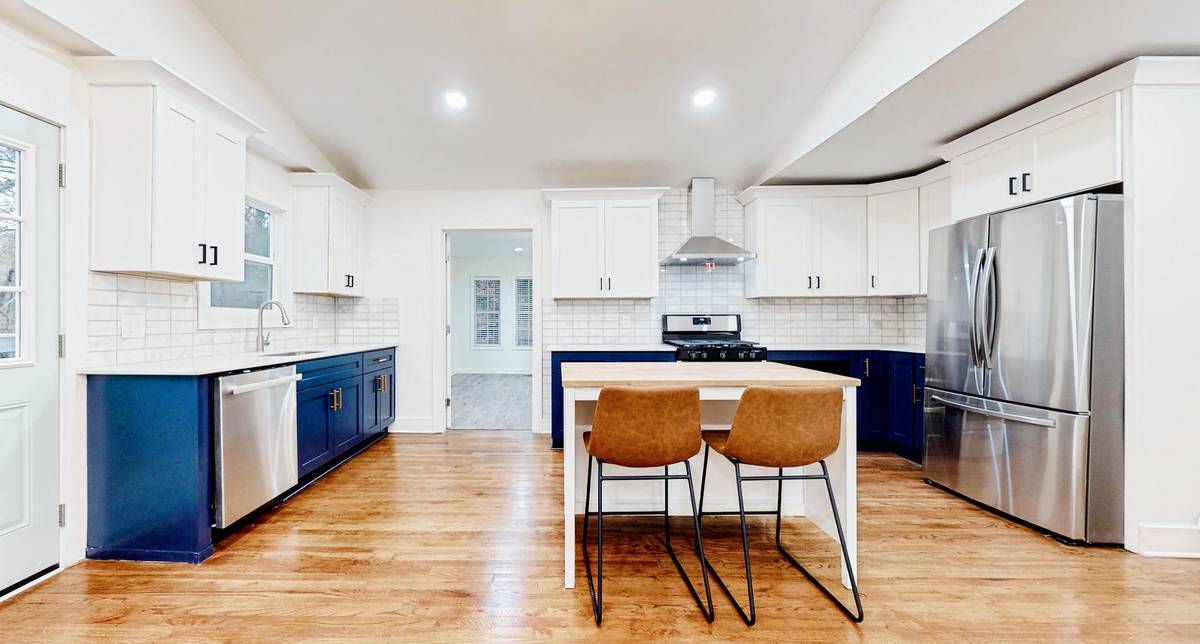
The most consistently profitable hosts stay involved: proactive maintenance, fast communication, and a clean, ready room every time. The data backs it up: in a survey of 717 members, those with a responsive host in their first week stayed 5.0 monthson average, versus 2.2 months for an unresponsive one — and 80% were still in the home at four weeks, versus just 44%.
Host responsiveness is the strongest retention signal we’ve found, and it’s free. A fast reply beats almost any amenity upgrade.
Trash cans with lids: a $10 fix members keep bringing up. Members consistently call these out as appreciated, and their absence is a surprisingly common complaint — worth checking every room.
Fits a queen? It’s probably worth the swap.
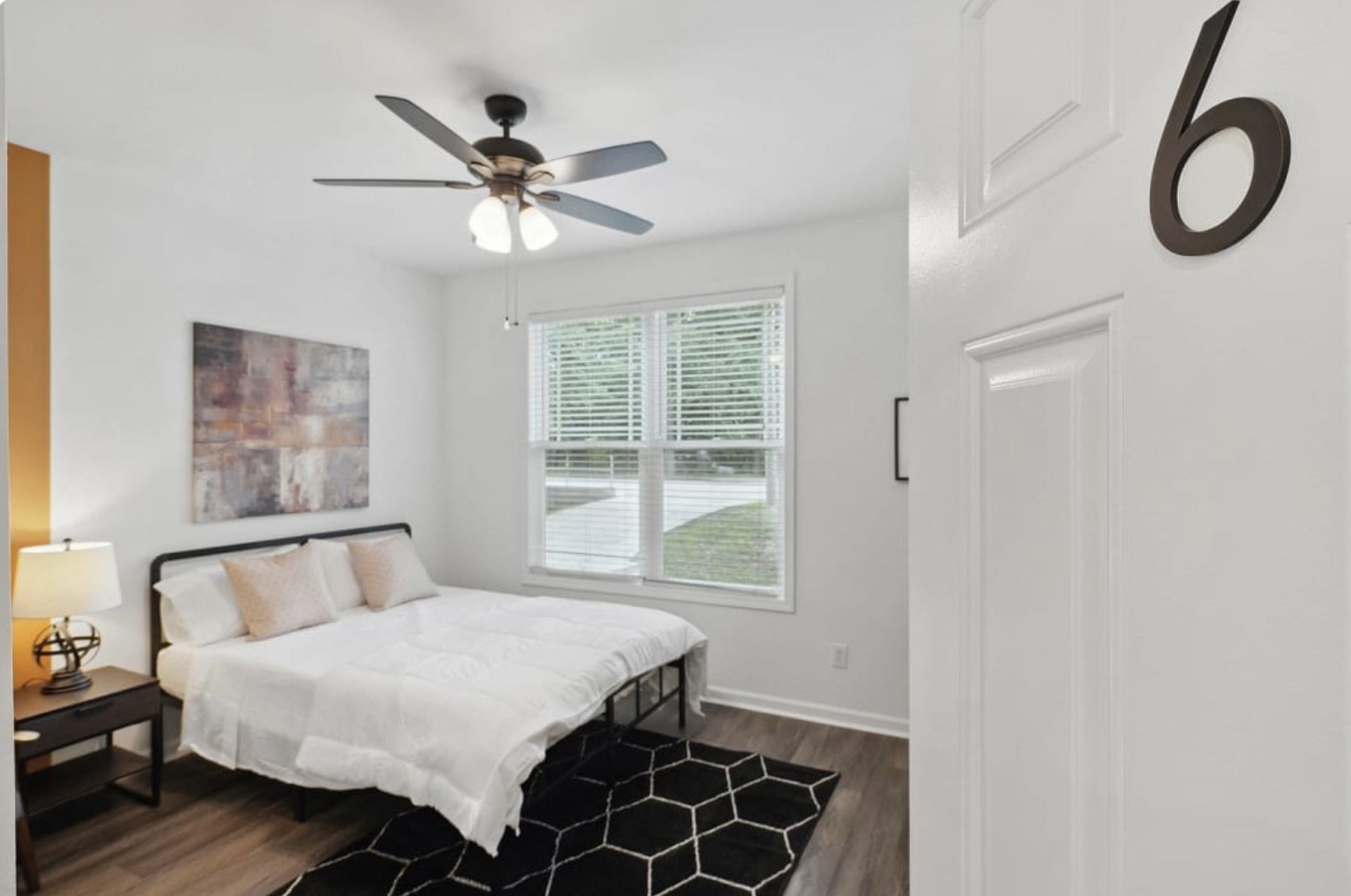
If a room can comfortably fit a queen instead of a twin, members prefer it, and it shows up in the data. Across the marketplace, upgraded queen/king beds add +$32/week (+17%) in booked rate and fill 0.7 days faster, even with a modest occupancy trade-off (-3.3 pts). It’s one of the more reliable rate levers available to hosts.
Measure before you buy. Not every room can fit a queen frame with clearance, but more can than hosts assume. A tape measure and ten minutes will tell you.
Prioritize your next turn, not a mid-lease swap. The cheapest time to upgrade is between members, when the room is already empty.
Say it in the listing. “Queen bed” in your amenities is a small line that members actively search for and will pay more to get.
A cheap, faster-fill signal: smart TVs


Rooms that mention a smart TV book faster in 11 of 14 metro areas we looked at, anywhere from about 1.5 to 4 days quicker, averaging roughly a day faster overall. Using Tampa’s median booked rate (~$28/day) as a rough stand-in for what a vacant day costs you, that’s about $40–$110 in avoided vacancy per turnover depending on the metro, often enough to pay back a mid-range smart TV (~$150–$250) within one to three turns.


Thinking about adding a property to PadSplit?
Your Host Success Manager can pull the data and run a property analysis on any property you’re considering adding to PadSplit.
Talk to your Host Success Manager.


