

Finding the right tenants can make every other part of renting easier. With reliable renters in place, payments arrive on time, your property stays well cared for, and you spend less time dealing with avoidable problems. But rushing the process can leave you managing the consequences of a poor fit for months.
The good news is that finding qualified renters depends more on process than on luck. Competitive pricing, strong presentation, smart advertising, and consistent screening all work together to draw the right applicants. This guide covers how to find tenants step by step, from preparing your home to finalizing the lease, so you can find a renter who’s the right fit for your property and your management style.
Here’s the process at a glance:
- Define what a good tenant looks like for your property and priorities.
- Prepare the rental so it’s clean, functional, and photo-ready.
- Price your property competitively for your local market.
- Write a clear listing that speaks to the right renters.
- Advertise where your ideal renters are already looking.
- Pre-screen inquiries to focus on renters who can qualify.
- Host efficient showings or open houses.
- Formally screen your top applicants and check references.
- Sign the lease and welcome your new renter.
Let’s take these one at a time.
What makes a good tenant?
Before you can attract the right renters, it helps to define what “good” actually means in measurable terms. A strong applicant generally pays rent on time, communicates openly, respects the property and neighbors, and stays long enough that you’re not re-listing every few months. The goal is to turn those qualities into objective criteria you can use to evaluate every applicant the same way, which keeps your decisions fair, consistent, and compliant with fair housing law.
Decide your standards before you meet anyone, write them down, and hold every applicant to them equally. Use the example below as a starting point for building your own list of preferred renter qualities.
| Criteria | What to look for | Why it matters |
|---|---|---|
| Income-to-rent ratio | Gross monthly income of roughly 2.5–3x the rent | Signals the rent is manageable without financial strain |
| Credit screening | Reasonable score, with no recent unpaid rent or evictions | Shows a track record of meeting obligations |
| Rental history | On-time payments and proper notice at past rentals | Predicts how they’ll treat your property and lease |
| References | Positive input from past property owners or employers | Confirms the story behind the paperwork |
| Communication | Prompt, clear, and courteous replies | Reliable communication usually continues after move-in |
Set your thresholds once, publish them in your listing where appropriate, and stick to them. Consistency is your best protection against both a bad match and a fair housing complaint.
Get your rental ready to attract quality applicants


Renters can often tell within seconds whether a property is well cared for. Qualified renters typically have a wider pool of options, so your property needs to meet the standard they expect. Before you photograph or list your rental, take the time to get it move-in ready. Deep clean every room, handle the small repairs (leaky faucets, sticky doors, burned-out bulbs), and make sure the appliances, heat, and air conditioning all work. A fresh coat of neutral paint and good lighting go a long way.
Small, low-cost upgrades often pay for themselves in faster leasing. Updated cabinet hardware, a fresh shower curtain and liner, blinds that actually close, and tidy landscaping at the entrance can all make a strong impression on a prospective renter. The goal is to remove the small reasons a qualified renter might hesitate.
If you’re renting by the room, pay special attention to shared spaces. A clean, functional kitchen and bathroom are especially important to renters, since those are the areas they’ll use on a daily basis.
Price your rental competitively
Price is the single biggest influence on how quickly you find renters and the quality of the applicants you attract. Set it too high and your listing sits, drawing few qualified offers. Set it too low and you leave money on the table and can attract more applications than you can screen effectively.
To land on a competitive number, research comparable rentals in your area (same neighborhood, similar size, similar condition and amenities) and see what’s actually renting, not just what’s listed. Pay attention to what’s included with the rental. A slightly higher rent with utilities, internet, and furnishings bundled in can read as a better value than a lower-priced listing with a stack of add-on costs.
Rent-by-the-room pricing deserves its own look. Renting a single-family home to one household gives you one rent check, and everything rides on one tenant. Renting the same home by the room can open the door to a different pool of applicants and lets you collect rent from multiple tenants instead of one. It’s worth modeling both scenarios before you set a price. You can estimate potential returns with PadSplit’s earnings calculator; actual results vary by property, market, and how you operate.
Write a listing that draws the right renters
Your listing does two jobs: it attracts qualified renters, and it quietly filters out people who aren’t a fit. Lead with the benefits of living there, like a short commute, in-unit laundry, and included utilities. Then give the practical details renters need to qualify themselves before they ever contact you.
Write in plain, welcoming language, and be specific. “Bright, freshly painted private room with utilities and Wi-Fi included, 10 minutes from downtown” tells a renter far more than “nice room for rent.” Photos carry most of the weight, so use bright, honest, clutter-free images of every space, including shared areas.
Use this checklist so your ad doesn’t leave out key details that generate quality applications:
- Clear headline with the main benefit
- Monthly rent and what’s included (utilities, internet, furnishings)
- Number of bedrooms and bathrooms, or room type if renting by the room
- Square footage or room size
- Location and nearby transit or work hubs
- Availability date and lease length
- Pet, smoking, and guest policies
- Any objective qualification standards (for example, income-to-rent ratio)
- High-quality photos of every room and shared space
- A simple, direct way to inquire
Honesty here saves you time later. Naming your policies and standards up front means the people who reach out are more likely to be the ones who can actually qualify.
Where to advertise your rental
The best way to find renters is to post where they’re already searching. A handful of channels do most of the work:
- Online rental marketplaces: the large listing sites most renters check first.
- Room-rental platforms: sites like PadSplit, if you’re renting by the room.
- Social media and local groups: neighborhood pages and community boards.
- Word of mouth: current tenants, neighbors, and your own network.
- A yard sign: still effective for local renters who drive through the area.
Post on more than one channel, respond quickly, and track where your best inquiries come from so you can focus your efforts there in the future. For a deeper walk-through of listing copy, photos, timing, and measuring channel performance, see our full guide on advertising a rental property.
Pre-screen inquiries before scheduling showings
Not all inquiries will be worth pursuing. A quick pre-screen respects your time and theirs, and it lets you focus your energy on renters who are a genuine fit for your property. Ask every inquiring renter the same short set of questions, and keep them tied to objective, fair-housing-safe topics like timing, occupancy, and the standards in your listing.
A simple pre-screening question list to reference:
- When are you looking to move in, and is that date flexible?
- How many people would be living in the home?
- Do you have pets, and if so, what kind?
- Are you able to meet the income and rental-history standards in the listing?
Ask these of everyone who inquires, in the same way, and you’ll build a consistent picture of each renter while keeping your process fair. If someone can’t meet your basic criteria, it’s kinder to everyone to say so early.
Make showings and open houses work for you
Showings are what move a good listing toward a signed lease. For individual showings, confirm the appointment in writing, be on time, and let the renter picture themselves in the space rather than talking over them. For a property drawing significant interest, a scheduled open house can be efficient: you show once, and renters can see there’s healthy demand.
Come prepared with an application on hand (paper or a link) so an interested renter can move forward right away. Take a few notes after each visit while it’s fresh: Were they on time? Did they ask thoughtful questions? Consistent, respectful communication during a showing is a good early signal of the renter you’ll have after move-in.
Screen applicants and check references
Screening is essential to confirm that a promising applicant is truly a good fit. Apply the same standards to everyone: verify income against your income-to-rent ratio, run a credit screening, review rental history, and call references from past property owners. Ask former property owners the questions that matter most: did they pay on time, give proper notice, and leave the place in good shape?
Keep your process identical for every applicant. That consistency protects you legally and helps you make a confident, well-documented decision.
Red flags to watch for:
- Reluctance to complete an application or provide references
- Income well below your stated income-to-rent ratio
- A recent eviction or a pattern of unpaid rent
- Application documents or references that appear altered, fabricated, or unverifiable
- Pressure to skip screening or pay in unusual ways
- Inconsistent details between the inquiry, application, and conversation
- Rushing you to hand over keys before paperwork is done
One red flag isn’t always a dealbreaker, but it’s your cue to ask more questions before you commit.
What to do when good applicants are slow to arrive
Sometimes you do everything right and your ideal renters still trickle in slowly. Before you drop your standards, revisit the fundamentals. If your listing is getting views but few applications, the issue is usually price or presentation: recheck your comps, refresh your photos, and tighten your headline. If you’re getting almost no views, your listing may be on too few channels or buried by newer posts.
This is also the moment to consider whether your rental strategy fits your market. In many neighborhoods, demand for a single whole-home rental is thinner than demand for a lower-cost private room. Renting by the room can widen your pool of applicants, reduce the impact a single vacancy has on your overall income, and reach renters searching specifically for room rentals. It’s a different way to find tenants for your rental property, and it’s exactly where a platform built for room rentals can help.
How PadSplit finds and screens renters for you
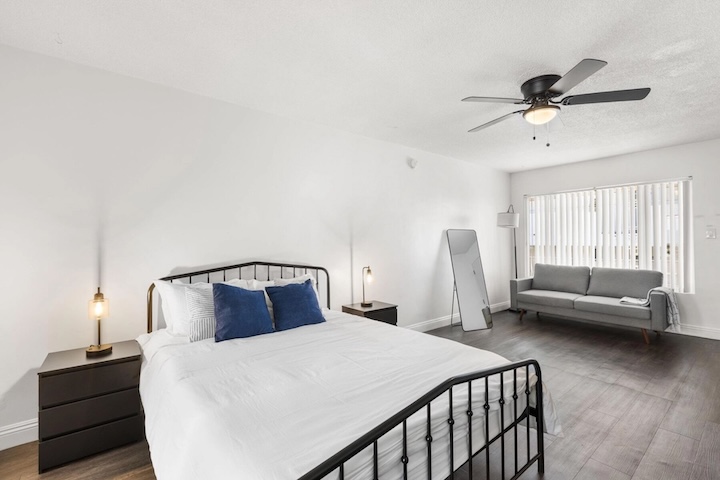
PadSplit is built around the rent-by-the-room model, connecting property owners with residents looking for flexible, private room rentals. Instead of listing on your own across multiple channels, you list your rooms once on a platform where renters are already searching for exactly what you’re offering.
PadSplit supports the work this guide describes in three ways:
- Sourcing: Your rooms are marketed to a large audience of renters actively looking for room rentals, so you’re not starting from scratch on every channel.
- Screening: PadSplit handles member screening and verification, applying consistent standards so you can review qualified residents rather than sorting through unfiltered inquiries.
- Payments and support: Rent collection and member support are handled through the platform, which reduces the day-to-day follow-up that takes up a property owner’s time.
If you want the full picture, take a look at how PadSplit works for property owners, our guide to renting out rooms in your house, and what to expect as a PadSplit host.
Finding the right renter takes a plan, not luck
Knowing how to find renters comes down to a repeatable process, not luck. Handle each step consistently and you’ll spend less time filling vacancies and more time with renters who treat your property well. Whether you handle it yourself or use a platform to take on the heavy lifting, the fundamentals stay the same: price fairly, present honestly, screen consistently, and treat every applicant with respect.
Frequently asked questions
How hard is it to find tenants for a rental property?
Finding tenants for a rental property is usually manageable when your rental is priced right, presented well, and advertised where renters search. When it takes longer, the cause is usually a fixable issue like overpricing, weak photos, or too few listing channels, rather than a lack of renters.
How long does it usually take to find a tenant?
Filling a rental commonly takes a few weeks from listing to signed lease, though it varies widely by market, season, and price. A competitively priced, well-marketed rental in a high-demand area can move in days, while a mispriced or hard-to-reach one can take months. Tracking your views and applications helps you spot a problem early.
Is it easier to find renters for a whole house or for individual rooms?
Finding renters for individual rooms is often easier than for a whole house, though it depends on your market. Individual rooms usually attract a larger pool of renters because the monthly cost is lower and more accessible. A whole-house rental means fewer people to manage, but everything is riding on one tenant.
Should you pay a realtor or property manager to find tenants?
Hiring a realtor or property manager can save time if you own multiple properties or live far away, but it comes at a cost, often a portion of the first month’s rent or an ongoing percentage. Many property owners successfully find renters themselves using online listings and consistent screening. Platforms built for room rentals offer a middle path that handles sourcing and screening for you.
What can you legally ask a prospective tenant?
You can ask about income, employment, rental history, credit, the number of occupants, and move-in timing. Fair housing laws prohibit questions or decisions based on protected classes such as race, color, religion, national origin, sex, familial status, or disability. Keep every question tied to objective qualifications, ask everyone the same things, and check your local rules, which can add protections.
How does PadSplit match hosts with pre-screened renters?
PadSplit lists your rooms to a large audience of renters searching specifically for room rentals, then applies consistent credit screening and verification before tenants book. Property owners review qualified renters rather than sorting through unscreened inquiries.
This article is general information for property owners, not legal advice. Rental and fair housing laws vary by location and change over time. Confirm requirements with a qualified professional or your local housing authority before making decisions.


