

A vacant rental costs you money every single day it sits empty, which makes rental property marketing one of the highest-leverage things a landlord does, and one of the easiest to do poorly. Post a blurry photo and a two-line description on one site, and you’ll wait weeks for the wrong applicants. Do it well, and a good listing can generate qualified inquiries within days.
This guide covers how to advertise a rental property the way an individual landlord actually needs to: what to do before you post, how to write and photograph a listing that converts, where to actually post it, and how that changes if you’re renting a single room instead of a whole unit.
Prep your rental before you market it
The best marketing can’t compensate for a property that isn’t ready to be seen. Before you write a single word of your listing, get the property itself in shape.
Pre-listing prep checklist:
- Deep clean every room, including baseboards, appliances, and windows
- Complete outstanding repairs (leaky faucets, broken fixtures, damaged flooring)
- Improve curb appeal: mow, trim, sweep the entryway, clear clutter
- Remove personal items and excess furniture to make spaces feel larger
- Research comparable rents in your immediate area
- Confirm your target move-in date and application requirements
Skipping this step doesn’t just make your photos worse; it also increases the odds you’ll need to renegotiate or lose an otherwise-qualified applicant after a showing reveals issues your listing didn’t mention.
Set a rent price that markets itself
Pricing does more marketing work than almost any other single decision. A rental priced accurately for its market tends to generate strong initial interest and rent quickly; one priced even modestly above market can sit for weeks while comparable listings get all the attention.
- Pull three to five comparable listings (similar size, condition, and location) before setting your price.
- Price competitively for the first week. Strong early interest (multiple inquiries in the first few days) is one of the clearest signals your price is right; if inquiries are slow, that’s a signal to reassess, not just wait it out.
- Avoid round-number anchoring on the high end. A price like $1,895 can perform better than $1,900 in search filters that use rent ceilings.
Take listing photos that get clicks


Photos are usually the single biggest driver of whether someone clicks into your listing at all, and the biggest weakness in most DIY rental ads.
Photo shot list. Every listing should include:
- Exterior/front of the property (in good light, ideally daytime)
- Every bedroom, from a corner that shows the full room
- Every bathroom
- Kitchen, including counter space and appliances
- Living/common areas
- Storage spaces (closets, garage, basement)
- Parking or outdoor space
- Any standout feature (updated kitchen, in-unit laundry, private entrance)
Photo basics that make a real difference:
- Shoot during the day with natural light, and turn on interior lights to avoid dark corners
- Shoot rooms from a corner, not the center, to capture more of the space
- Straighten and declutter before shooting. A tidy, empty countertop photographs better than a styled but cluttered one.
- Use landscape orientation, not portrait, for listing sites that display photos in a wide format
Ten to 20 photos is a reasonable range for most listings as it’s enough to cover every room and standout feature without overwhelming a prospective applicant.
Write a rental ad that converts
A strong rental ad answers the questions a prospective tenant actually has, in the order they’re asking them: what is it, where is it, what does it cost, and what makes it worth choosing over the next listing in their search.
A structure that works:
- Headline: Lead with the most compelling detail, be it the bedroom and bathroom count, a standout feature, or the location.
- Opening line: One sentence capturing the property’s best selling point.
- Description: Room-by-room highlights, condition, and any recent updates.
- Details: Rent, deposit, lease term, move-in date, pet policy, included utilities.
- Call to action: How to apply or schedule a showing.
Sample rental ad:
Bright 2BR/1BA Near Downtown — Updated Kitchen, In-Unit Laundry
This freshly painted 2-bedroom, 1-bathroom home offers a spacious layout just minutes from downtown. The updated kitchen features new appliances and ample counter space, and both bedrooms include large closets. In-unit washer/dryer included.
Rent: $1,895/month | Deposit: $1,895 | Available: 1st of next month | Pets: Cats welcome, no dogs | Utilities: Tenant pays electric and water
Schedule a showing today. Quality units like this don’t stay available long.
Fair housing wording to avoid
Every rental ad needs to stay compliant with fair housing law. Avoid language that could be read as discriminatory, even unintentionally.
| Avoid | Use Instead |
|---|---|
| “No kids” / “childless preferred” | (Omit; familial status is a protected class) |
| “Perfect for young professionals” | “Great for commuters” or omit entirely |
| “Christian household” / “near churches” only | Describe the neighborhood factually |
| “Walking distance to [specific ethnic community reference]” | Describe location by landmarks or transit |
| “Able-bodied tenants only” | (Omit; disability is a protected class) |
When in doubt, describe the property and the lease terms, not the type of person you’re picturing living there.
Where to advertise a rental property
Marketing a rental property across multiple channels increases visibility, but not every channel is worth the same time or money for an individual landlord.
| Channel | Cost | Reach | Best Use Case |
|---|---|---|---|
| Major listing sites (Zillow, Apartments.com, Realtor.com) | Free–$$ (paid boosts optional) | High | Primary listing; most renters search here first |
| Facebook Marketplace | Free | Moderate–High | Strong for local reach, especially single rooms and smaller units |
| Craigslist | Free | Moderate | Still active in many markets, especially for budget-conscious renters |
| Social media (personal or local community groups) | Free | Low–Moderate | Good supplementary reach, especially local neighborhood groups |
| Yard signs | Low one-time cost | Local only | Effective for drive-by visibility in walkable/high-traffic areas |
| Referrals (current tenants, network) | Free | Low–Moderate | Often yields the most pre-vetted, reliable applicants |
| Property management software/syndication tools | $ (varies) | High (one listing, multiple sites) | Efficient if managing multiple units or listing frequently |
For most individual landlords, listing on one or two major sites, cross-posting to Facebook Marketplace, and leaning on referrals covers the majority of qualified applicant traffic without requiring a paid marketing budget.
Free vs. paid advertising: What’s worth the money
You can advertise your rental property for free on most channels, but a few paid options are worth considering in the right circumstances.
Usually worth it:
- Featured or promoted listings on major sites, if a property has been sitting for longer than typical for your market. The boost in visibility often pays for itself in reduced vacancy time.
- Professional photography, for higher-end properties where photo quality is likely to be the deciding factor between comparable listings.
Usually not necessary for an individual landlord:
- Paid social media ad campaigns: organic posting to relevant local groups typically covers this audience without ad spend.
- Premium listing site tiers with add-on features most individual landlords don’t need (advanced analytics, multi-property dashboards).
The general rule: Pay for visibility when a listing is underperforming for reasons unrelated to price or condition, not as a default first step.
Marketing a room for rent
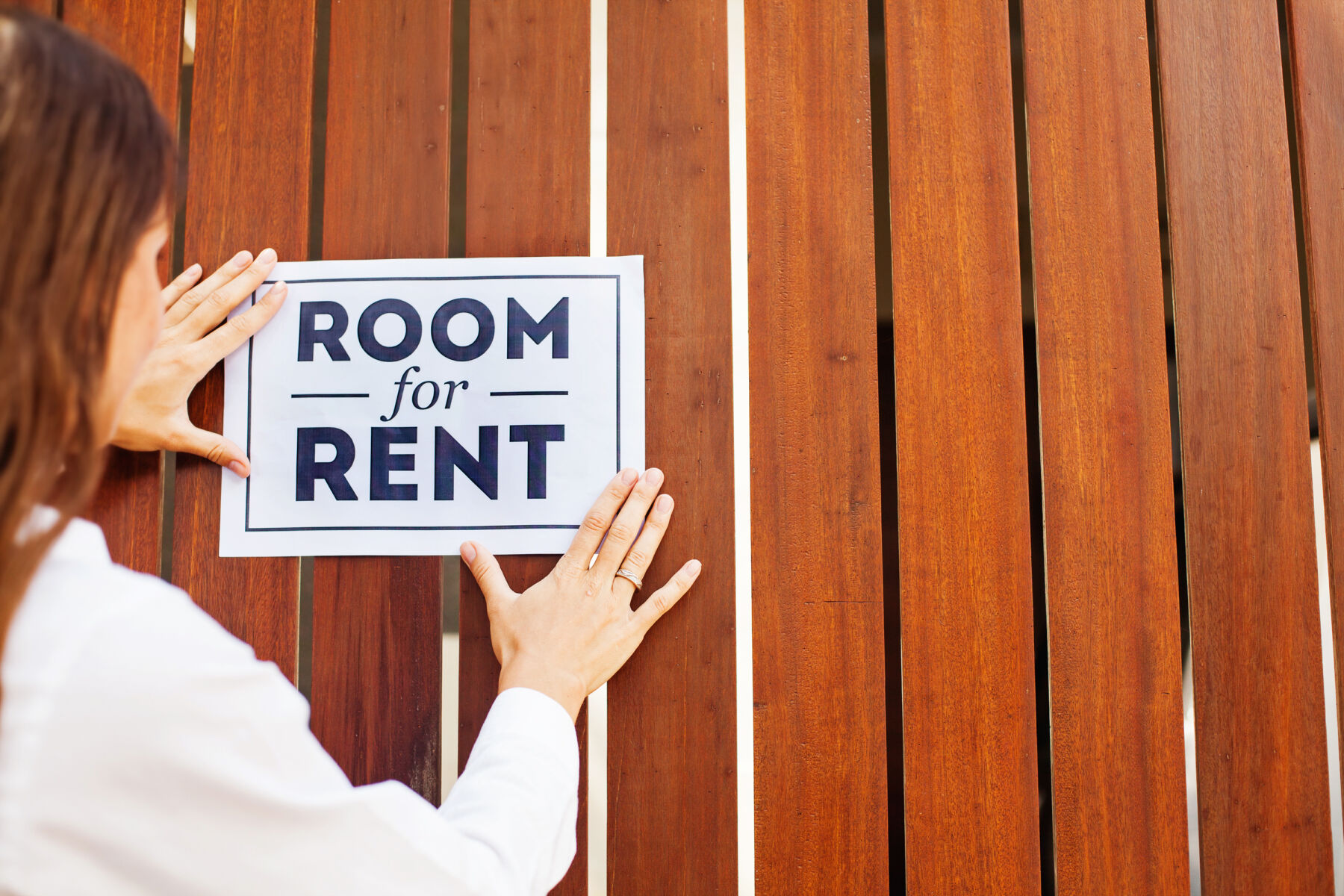
Marketing a single room within a house is different from marketing a whole unit, and most advertising guides skip it entirely. A few things change:
- Be explicit about what’s shared. Prospective renters need to know upfront which spaces (kitchen, bathroom, living room) are shared and with how many other people.
- Lead with privacy features. A locking bedroom door, private bathroom, or separate entrance is a strong selling point worth featuring prominently.
- Photograph shared spaces too, not just the private bedroom; prospective renters want to see the kitchen and common areas they’ll actually be using daily.
- Address compatibility, not just qualification, in your description. Mentioning the general vibe of the household (quiet, professional, pet-friendly) helps attract renters who are a good fit, not just financially qualified ones.
Sample room-for-rent ad:
Private Furnished Bedroom in Shared 4BR Home — All Utilities Included
Spacious private bedroom with a locking door in a well-maintained, shared 4-bedroom home. Fully furnished with a queen bed, dresser, and desk. Shared kitchen, living room, and two bathrooms with three other quiet, working professionals. Utilities, Wi-Fi, and weekly cleaning of common areas included.
Rent: $185/week | Deposit: One week’s rent | Available: Immediately | Included: All utilities, Wi-Fi, furnishings
This is a representative example, not an actual current listing.
Rooms tend to perform especially well on channels with strong local, budget-conscious search traffic. Facebook Marketplace and Craigslist often outperform major listing sites specifically for single-room ads, since many major sites are built primarily around whole-unit search filters. Marketing is only one piece of a room rental; this guide on how to rent out rooms in your house covers the rest of the process.
Time your marketing to the rental calendar
When you list matters almost as much as how you list.
- Start marketing 30–45 days before availability, when possible; that’s early enough to attract serious applicants without sitting vacant waiting for the right lease-start date.
- Expect faster turnaround in peak leasing season (typically late spring through late summer in most markets) and slower activity in winter months.
- Re-list rather than let a stale listing sit. A listing that’s been up for months with no edits can start to look neglected in search results. Refresh photos or copy periodically if a unit isn’t moving.
Measure what’s working and adjust
Treat your listing like something you can keep improving after it goes live. Track inquiries per channel. If one platform consistently generates more qualified inquiries than another, prioritize your time there.
- Note time-to-first-inquiry. A strong listing typically generates interest within the first few days. If a week passes with no response, reassess price, photos, or description before assuming the market is simply slow.
- Ask applicants how they found you. This simple question, asked consistently, builds a clearer picture of which channels are actually working over time than guessing ever will.
How PadSplit markets your rooms for you
Marketing a room effectively (writing the ad, taking the photos, cross-posting to the right channels, and fielding inquiries) takes real time, and it’s a recurring task every time a room turns over. PadSplit was built to take that work off hosts entirely for room-by-room rentals.
Rather than a host writing and managing their own room listings across multiple channels, PadSplit markets available rooms directly to its own base of prospective members actively searching for housing, in addition to syndicating eligible listings to other major platforms. That means hosts aren’t starting from a blank listing and an empty inbox every time a room opens up; demand generation is handled as part of the platform. You can see exactly what the platform handles versus the host in this breakdown of host responsibilities on PadSplit.Whether you’re marketing a whole unit or a single room, the fundamentals are the same: prepare the property, price it accurately, photograph it well, write a clear and compliant ad, and put it in front of the right audience. Getting those basics right is what turns a listing into inquiries, and inquiries into a signed lease. If you’d rather hand that work off entirely, learn more about hosting on PadSplit and estimate what your property could earn with the earnings calculator.
FAQs
How much does it cost to advertise a rental property?
Advertising a rental property can often be done for free using major listing sites, Facebook Marketplace, and Craigslist, which cover most of the qualified applicant traffic in a typical market. Paid options like featured listings or professional photography are optional add-ons worth considering mainly when a listing is underperforming or the property is higher-end.
What is the best free way to advertise a rental?
Listing on a major rental site alongside Facebook Marketplace tends to be the most effective free combination, since it covers both dedicated rental search traffic and strong local, community-based reach. Referrals from current tenants or your personal network are also free and often produce especially reliable applicants.
How do you advertise a room for rent in your own house?
Advertising a room for rent works best when the ad clearly states what’s shared (kitchen, bathrooms, common areas) and highlights privacy features like a locking door or private bathroom. Facebook Marketplace and Craigslist tend to perform especially well for single-room listings, since many major rental sites are built primarily around whole-unit search filters.
What should you never put in a rental ad?
Rental ads should never include language referencing protected characteristics under fair housing law, such as familial status, religion, national origin, or disability. Even phrases that seem harmless, like “perfect for young professionals,” can raise fair housing concerns. Stick to describing the property and lease terms rather than the type of person you picture living there.
How many photos should a rental listing have?
Most effective rental listings include somewhere between ten and twenty photos, covering every room, storage spaces, parking, and any standout features. Too few photos can leave prospective tenants with unanswered questions, while an excessive number can overwhelm rather than inform.
How long should it take to get inquiries after listing a rental?
A well-priced, well-photographed rental typically generates its first inquiries within a few days of listing. If a full week passes with little to no response, it’s usually a signal to reassess price, photos, or description rather than assuming the market is simply slow.
Do virtual tours help rent a property faster?
Virtual tours can help, particularly for out-of-area applicants or higher-end properties, by letting prospective tenants pre-qualify their interest before scheduling an in-person showing. For most individual landlords renting standard units, however, a strong photo set typically accomplishes the same goal without the added time and cost of producing a virtual tour.
How does PadSplit fill rooms without hosts doing their own marketing?
PadSplit markets available rooms directly to its own base of prospective members actively searching for housing, in addition to syndicating eligible listings to other platforms, rather than requiring hosts to write and manage their own ads. This removes the recurring work of advertising a room every time it turns over, which is typically one of the most time-consuming parts of self-managing a room rental.


