

House hacking has become one of the most popular entry points into real estate investing because it doesn’t require buying a separate investment property.
This guide covers what house hacking actually means, how the math works on a real example, the different strategies you can use, and what to check before you commit, including the legal and tax details that most explainers skip past.
What is house hacking?
House hacking is a real estate strategy where you live in a property while renting out part of it to generate income and reduce your housing costs. You might rent out a spare bedroom, a separate unit, or an accessory dwelling unit (ADU). The rental income can help cover your mortgage, taxes, insurance, and other housing expenses, potentially reducing your monthly housing costs significantly.
House hacking combines homeownership with rental income. Depending on the loan program and your qualifications, buying a property as your primary residence may also provide access to financing options that are different from those available for an investment property.
There are several ways to house hack. You could buy a duplex or triplex, live in one unit, and rent out the others; rent a spare bedroom in a single-family home; add an ADU and rent it to a tenant; or rent out part of a home you already own. The common goal is to use income from your primary residence to offset the cost of living there.
How house hacking works: The math on a real example
In the example below, renting three of four bedrooms cuts a $2,712 monthly housing payment to $325. Here’s how that breaks down.
| Line Item | Monthly Amount |
|---|---|
| Mortgage principal and interest | $1,720 |
| Property taxes | $290 |
| Homeowners insurance | $120 |
| Mortgage insurance (PMI) | $145 |
| Total PITI (housing payment) | $2,275 |
Now, say you rent out three of the four bedrooms at $650 each, living in the fourth yourself:
| Line Item | Monthly Amount |
|---|---|
| Rental income (3 rooms × $650) | $1,950 |
| Total PITI | $2,275 |
| Net monthly housing cost to you | $325 |
In this example, house hacking reduces a $2,275 monthly housing payment down to $325 out of pocket, a significant reduction achieved simply by renting out the bedrooms you weren’t using. In stronger rental markets, or with four rentable bedrooms instead of three, it’s entirely possible for the rental income to exceed the full PITI payment, meaning the property effectively pays you to live there.
Figures are illustrative. Actual numbers depend on your purchase price, loan terms, and local rental rates.
House hacking strategies compared: Rent by the room, multi-unit, ADU, and more
There isn’t one way to house hack. The right strategy depends on the property you have or can buy, your local market, and how much privacy and management effort you’re willing to trade for income.
| Strategy | Typical Income | Upfront Cost | Privacy | Management Effort |
|---|---|---|---|---|
| Rent by the room (single-family home) | High, multiple income streams from one property | Low to moderate (locks, shared-space setup) | Lowest, shared common areas | Moderate (or lower with a managed platform) |
| Multi-unit (duplex, triplex, fourplex) | Moderate to high, one tenant per separate unit | Higher purchase price than a comparable single-family home | High, separate living units | Low to moderate |
| Accessory dwelling unit (ADU) | Moderate, one additional unit | High (construction/conversion cost) | High, fully separate structure | Low to moderate |
| Short-term rental of a spare room or unit | Highest ceiling in strong travel markets, most volatile | Low to moderate (furnishing) | Lowest, frequent turnover | Highest |
Most house hacking guides focus heavily on the duplex-or-larger model, since it offers separate units and more privacy. But renting by the room in a standard single-family home deserves equal consideration, with several often-overlooked advantages: you don’t need to buy a specific type of multi-unit property, you can use a home you already own, and renting individual rooms can generate more total monthly income than renting entire units.
Pros and cons of house hacking

Pros:
- Owner-occupant financing offers lower down payments and better rates than investment loans
- Rental income directly offsets, or eliminates, your personal housing cost
- House hacking isa practical, low-barrier entry point into real estate investing
- Tax deductions are available for the rented portion of the home (covered below)
- You build equity and real estate experience simultaneously
Cons:
- You give up privacy, since you’re sharing your home with renters
- You take on the responsibilities of being a landlord, including screening, maintenance, and potential conflict
- Local zoning, HOA, or lender restrictions may limit what’s allowed
- Managing tenant relationships while also living on the property can create friction that a standalone rental property doesn’t
- Income isn’t guaranteed. Vacancy or a difficult tenant situation directly affects your own housing costs, not just an investment return
How to finance a house hack
Most house hackers use one of a few common owner-occupant loan types, each with its own requirements:
- Conventional loans: Can offer down payments as low as 3-5% for owner-occupied properties, including multi-unit properties up to four units, provided the buyer lives in one unit.
- FHA loans: Allow down payments as low as 3.5% and are commonly used for house hacking multi-unit properties, since FHA loans permit properties with up to four units as long as the borrower occupies one.
- VA loans: Available to eligible veterans and service members, often with no down payment required, and can be used on multi-unit properties under the same owner-occupancy requirement.
A key detail across all of these: lenders generally require you to live in the property as your primary residence, typically for at least a year, to qualify for owner-occupant terms. Attempting to use owner-occupant financing without genuinely occupying the property can violate your loan terms.
Lenders may also allow you to count a portion of projected or existing rental income toward your mortgage qualification, which can increase your buying power, though the specific percentage counted and documentation required vary by loan type and lender.
Is house hacking legal? Zoning, HOA, and occupancy rules to check first
House hacking itself isn’t illegal, but specific implementations can run into local rules that limit what you can actually do with a property. Before committing to a strategy, run through the checks below.
Pre-purchase legality checklist:
- Zoning and occupancy limits: Confirm how many unrelated people can legally live in the property under local zoning code. This matters most for room-by-room house hacking.
- HOA rules: Review the property’s HOA bylaws, if applicable, for restrictions on renting rooms or units.
- Lender occupancy requirements: Confirm your loan’s owner-occupancy terms and how long you’re required to live in the property.
- Local licensing and permits: Check whether your city requires a rental license or permit for renting rooms or additional units.
- Insurance requirements: Confirm what insurance changes are needed once you begin renting part of your home (see the insurance FAQ below).
These checks matter most for room-by-room house hacking and ADU conversions, since multi-unit properties (duplexes, triplexes) are typically already zoned for multiple households and face fewer occupancy-limit complications than a single-family home converted into a shared living arrangement.
House hacking taxes and deductions
Renting out part of your primary residence changes your tax situation. This is general information, not tax advice. Consult a tax professional for guidance specific to your property and situation.
The core concept behind most house hacking tax deductions is the proportional-split formula:
Deductible portion of a shared expense = (Rented square footage ÷ Total square footage) × Total expense
Example: If you rent out 800 square feet of a 2,000-square-foot home (40% of the space), you can generally deduct 40% of shared expenses like mortgage interest, property taxes, insurance, and utilities against your rental income.
Categories commonly affected by this split include:
- Mortgage interest and property taxes: Generally deductible against rental income in proportion to the rented space.
- Utilities and shared-space expenses: Deductible in proportion to rented space, or in proportion to actual usage if you have a way to measure it.
- Depreciation: The rented portion of the home can typically be depreciated over its useful life, reducing taxable rental income, though this is also a factor to weigh against future capital gains treatment when you eventually sell.
- Direct expenses for the rented space: Costs that apply only to the rented portion (a lock installed for a rented room, furnishing for that space) are generally fully deductible rather than split proportionally.
Because house hacking mixes personal and rental use of the same property, the tax treatment is more nuanced than for a standalone rental property, and getting the split calculations right is worth professional guidance, especially in your first year.
Common house hacking mistakes to avoid
- Underestimating the privacy tradeoff. Sharing a home with renters is a real lifestyle change, not just a financial one. Consider it honestly before committing.
- Skipping zoning and HOA research before buying. Purchasing a property assuming a room-rental or ADU strategy will work, without confirming local rules first, can leave you unable to execute your plan.
- Not budgeting for vacancy. Because rental income directly offsets your own housing cost, a vacant room or unit is a direct hit to your personal budget.
- Choosing tenants under time pressure. Since you’ll be living alongside your renters (in room-by-room and some ADU setups), rushing tenant selection to avoid a vacancy can create ongoing friction that’s harder to walk away from than in a standalone rental.
- Ignoring the proportional tax-split calculation. Claiming a full deduction for a shared expense, rather than the correctly proportioned share, can create issues if your return is ever reviewed.
How to start house hacking, step by step
- Run the numbers before you shop. Use a target purchase price, estimated rental income, and current interest rates to calculate your projected net housing cost, similar to the worked example above.
- Get pre-approved with an owner-occupant loan. Confirm which loan type fits your situation and what occupancy requirements apply.
- Choose your strategy and property type. Decide between a room-by-room single-family home, a multi-unit property, or an ADU conversion based on your budget, market, and privacy preferences.
- Check zoning, HOA, and local rules before making an offer, using the pre-purchase checklist above.
- Close on the property and prepare the rentable space, whether that’s adding locks and furnishing rooms, or preparing a separate unit for tenants.
Once you’ve closed and prepared the property, the process shifts to standard rental operations: pricing, marketing, screening, and leasing. Our guide on how to rent out rooms in your house covers that part of the process in full detail.
House hacking with PadSplit: Rent rooms without becoming a full-time landlord
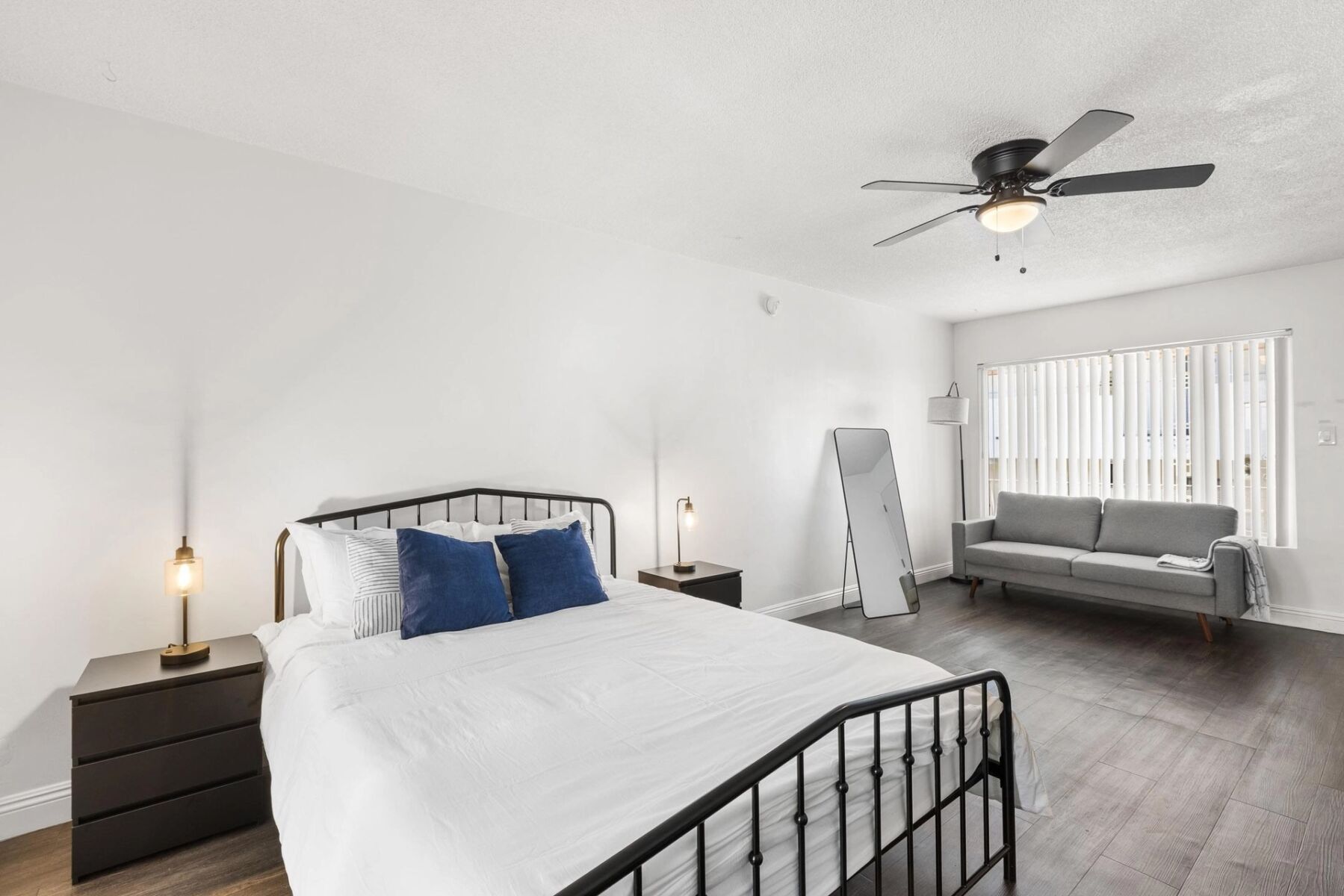
If you’re considering room-by-room house hacking specifically, one of the biggest practical hurdles is usually the ongoing work of screening renters, collecting rent, and managing multiple tenant relationships while also living in the property yourself.
PadSplit was built to address exactly this friction. We handle property and member management, including member screening, weekly rent collection, and ongoing host support, so you can house hack by renting rooms without taking on the full operational workload of managing several tenants yourself. If you’re new to the platform, start with what PadSplit is and how it works for real estate investors.
This can be especially valuable in an owner-occupied house hack, where you’re sharing daily space with the people you’re renting to and want that relationship supported by clear, consistent systems rather than handled entirely ad hoc. Estimate what your rooms could earn with the PadSplit earnings calculator, and read stories from hosts who used room rentals to reduce or eliminate their housing costs.
House hacking is one of the most accessible ways to turn the home you already need into an income-generating asset, but it works best when you go in with real numbers, a clear-eyed view of the privacy tradeoff, and the local zoning and lending rules confirmed before you buy, not after.
House Hacking FAQs
What is the difference between house hacking and the Nomad strategy?
House hacking typically means living in a property while renting out part of it long-term. The Nomad strategy means buying a new owner-occupant property roughly every year, living in it briefly, then converting it to a full rental and repeating the process. Both use owner-occupant financing, but house hacking usually implies an ongoing, stable living arrangement, while the Nomad strategy is built around frequent moves and portfolio growth.
Can you house hack a single-family home, or do you need a multi-unit property?
You can house hack a single-family home by renting out individual bedrooms, which doesn’t require the property to have separate units the way a duplex or triplex strategy does. Room-by-room house hacking in a single-family home is often more accessible, since it works with a much larger pool of available properties than multi-unit buildings.
What are the limits to house hacking?
Limits typically come from local zoning occupancy rules (how many unrelated people can legally live together), your loan’s occupancy requirements, and the physical layout of the property itself. For multi-unit properties, FHA and VA loans generally cap owner-occupant financing at properties with up to four units, while room-by-room limits depend entirely on local zoning rather than a loan-based cap.
How long do you have to live in a house hack before you can move out and rent the whole property?
Most owner-occupant loans require you to live in the property as your primary residence for at least one year before converting it entirely to a rental, though exact requirements vary by loan type and lender. Confirm your loan’s occupancy terms before making plans to move out, since violating owner-occupancy requirements can create issues with your lender.
What insurance do you need when you rent out part of the home you live in?
Standard homeowners insurance typically doesn’t fully cover rental activity, even for a single rented room within your primary residence, so most house hackers need to add landlord or rental-specific coverage to their policy. Contact your insurance provider directly to confirm what coverage change is needed for your house hacking arrangement.
How much more can you earn renting rooms individually versus renting a whole unit?
Renting rooms individually often generates more total monthly income than renting the same space as a single unit, since each room produces its own rent payment instead of relying on one tenant for the entire space. The exact difference depends on the property, local market, and number of rentable rooms, but multiple income streams from one property generally outperform a single lease on the same square footage.
When you’re ready, here’s a step-by-step guide to hosting with PadSplit.


